How to Plan a Remodel in 2026: A Homeowner’s Guide to Budget, Timeline, Materials, and Contractor Selection

Planning a remodel in 2026 looks different than it did a few years ago.
Homeowners are more informed, more design-aware, and more cautious about where their money goes. They want beautiful spaces, but they also want transparency, better communication, durable materials, clear timelines, and confidence that the work will be done right.
Whether you are planning a kitchen remodel, bathroom renovation, basement transformation, home addition, or whole-home improvement project, the smartest remodels do not start with demolition.
They start with a plan.
That is why Prosper Construction created The 2026 Remodel Planning Playbook, a free homeowner guide designed to help you plan smarter, budget better, avoid costly surprises, and understand what to ask before hiring a remodeling contractor.
If you are considering a remodel in Massachusetts, Worcester County, Central MA, or MetroWest, this guide will help you think through the decisions that matter before construction begins.
Download the Free 2026 Remodel Planning Playbook
Before you compare estimates, choose materials, or hire a contractor, download Prosper Construction’s free remodel planning guide.
Get the Free GuideWhy Remodeling Feels Harder Than It Should
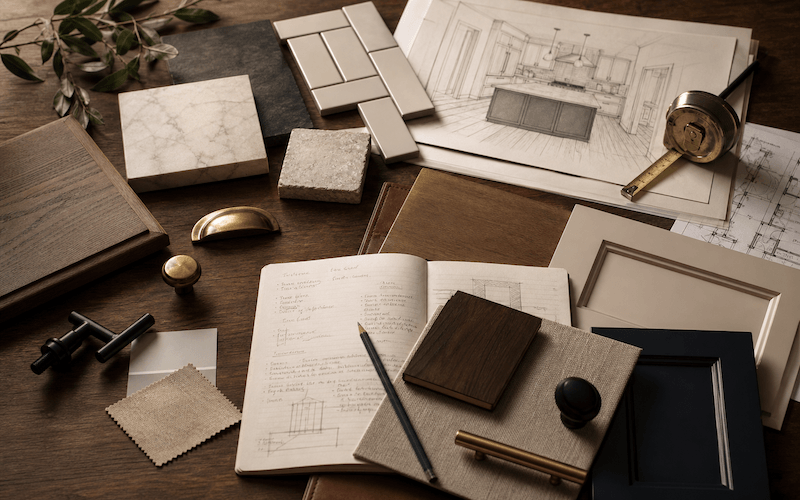
Most homeowners begin the remodeling process with inspiration photos.
They save kitchen ideas, bathroom designs, basement layouts, tile samples, cabinet colors, and wish lists. That part is exciting.
But the real success of a remodel depends on what happens before the work starts.
A successful remodeling project needs more than a good-looking design. It needs:
- Clear project goals
- A realistic budget
- A written scope of work
- Documented selections
- A communication system
- A realistic timeline
- A protection plan for the home
- A process for change orders
- A quality-control system
- A warranty that actually matters
Without those things, even a beautiful design can become stressful.
That is why the best remodeling companies do not just focus on the finished photo. They focus on the process that gets you there.
The Biggest Remodeling Mistake: Starting Without a Clear Goal
Before you choose cabinets, tile, countertops, flooring, paint colors, or fixtures, you need to define the real reason you are remodeling.
A remodel should not begin with:
“What color cabinets do I want?”
It should begin with:
- What is not working right now?
- What daily frustration do I want gone?
- What would make this space easier to live in?
- What needs to improve for family, storage, resale, hosting, comfort, or aging in place?
- What do I not want to regret after the project is finished?
For example, if your kitchen feels crowded every morning, the real problem may not be the cabinet color. It may be layout, storage, traffic flow, lighting, appliance placement, or lack of prep space.
If your bathroom feels outdated, the real issue may be more than finishes. It could be ventilation, storage, shower comfort, lighting, privacy, or long-term accessibility.
A clear goal helps every decision become easier.
2026 Remodeling Trends Are About Function and Feeling
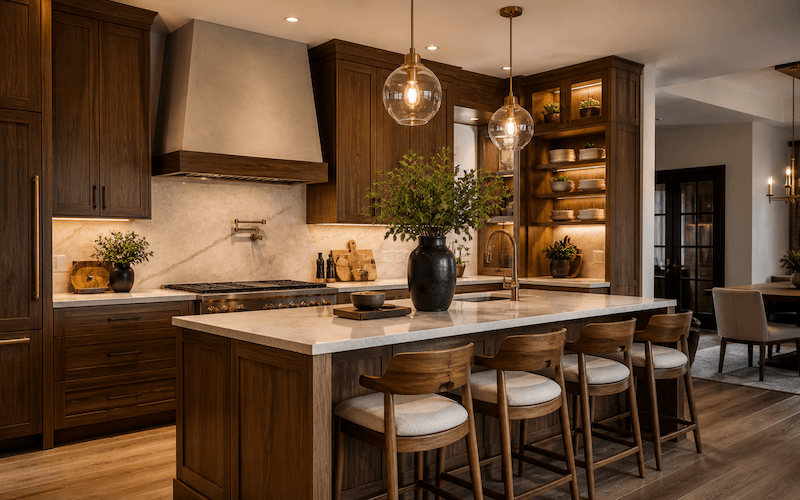
The biggest remodeling shift heading into 2026 is that homeowners are moving away from cold, sterile, showroom-only spaces.
The new direction is warmer, more personal, more functional, and more durable.
For homeowners, that means the best remodels are not just about what looks good on day one.
They are about what still feels right years later.
Popular 2026 remodel priorities include:
- Warm wood tones
- Natural stone looks
- Textured tile
- Soft matte finishes
- Earthy greens and taupes
- Brass, bronze, or black accents
- Durable flooring
- Better lighting layers
- Hidden storage
- Spa-like bathrooms
- Indoor-outdoor living
- Spaces that support daily routines
The goal is not to chase every trend.
The goal is to create a home that feels elevated, personal, functional, and built around the way you actually live.
Build a Smarter Remodel Budget
Many homeowners build their remodel budget around the lowest number they hear.
That can be risky.
A lower estimate is not always a better estimate. Sometimes it means important details have not been included, selections are unclear, allowances are too low, or change orders are likely later.
A smarter remodel budget should consider:
- Construction cost
- Design selections
- Material quality
- Permit costs
- Potential hidden conditions
- Temporary living adjustments
- Site protection
- Change-order buffer
- Long-term durability
- Warranty and protection value
A better contractor does not just give you a number.
They help you understand what that number includes, what it does not include, and where surprises can happen.
Before comparing remodeling estimates, ask:
- What exactly is included?
- What is excluded?
- Are allowances realistic?
- How are change orders handled?
- What could change the price?
- Is the scope of work clearly written?
- Does the estimate include site protection, cleanup, and project management?
- What warranty is included after completion?
This is especially important for homeowners planning larger projects like kitchen remodeling, bathroom remodeling, basement remodeling, home additions, or whole-home renovations in Massachusetts.
A Better Remodel Starts Before Construction Begins
Use the free guide to define your goals, build a smarter budget, understand your timeline, and ask better contractor questions.
Get the Free Planning GuideKnow Where to Spend and Where to Save
Not every upgrade matters equally.
Some upgrades affect daily life, durability, comfort, and resale value. Others are mostly cosmetic and easier to change later.
The key is knowing where quality matters most.
Spend More On:
- Cabinet construction
- Waterproofing
- Flooring durability
- Lighting layout
- Ventilation
- Electrical and plumbing planning
- Countertops and high-touch surfaces
- Shower systems
- Storage solutions
- Craftsmanship and installation
Save Strategically On:
- Decorative hardware
- Paint colors
- Some lighting fixtures
- Certain tile patterns
- Accent walls
- Freestanding furniture
- Accessories
A simple rule:
If it is high-impact and hard to change later, it is usually worth investing in.
If it is low-impact and easy to change later, it may be a place to save.
This is where planning matters. The right design-build process helps you spend intentionally instead of reacting emotionally once the project is already underway.
Plan Around the Way You Actually Live
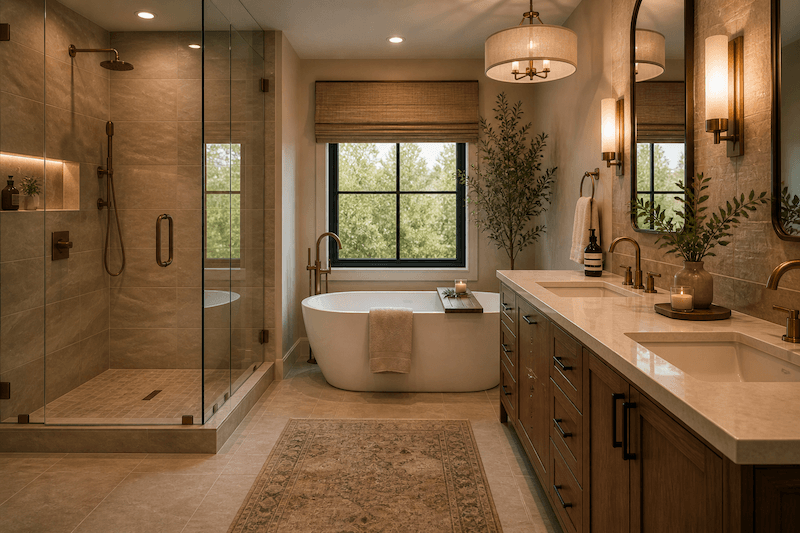
A beautiful room that does not work for your routine becomes frustrating fast.
Before finalizing your remodel design, think about how the space needs to function every day.
For a kitchen remodel, consider:
- Cooking habits
- Prep space
- Pantry storage
- Appliance flow
- Seating
- Lighting
- Family traffic
- Hosting
- Cleaning
- Charging stations
- Hidden storage
For a bathroom remodel, consider:
- Vanity storage
- Shower comfort
- Lighting
- Ventilation
- Privacy
- Cleaning
- Aging in place
- Heated flooring
- Tub versus shower use
- Towel and linen storage
For a basement remodel, consider:
- Entertainment
- Guest space
- Fitness
- Office space
- Storage
- Moisture planning
- Sound control
- Lighting
- Egress
- Long-term flexibility
For a home addition, consider:
- Traffic flow
- Exterior match
- Heating and cooling
- Natural light
- Permits
- Long-term use
- Connection to existing spaces
The best remodels are designed around real life, not just Pinterest boards.
Think Beyond the Before-and-After Photo
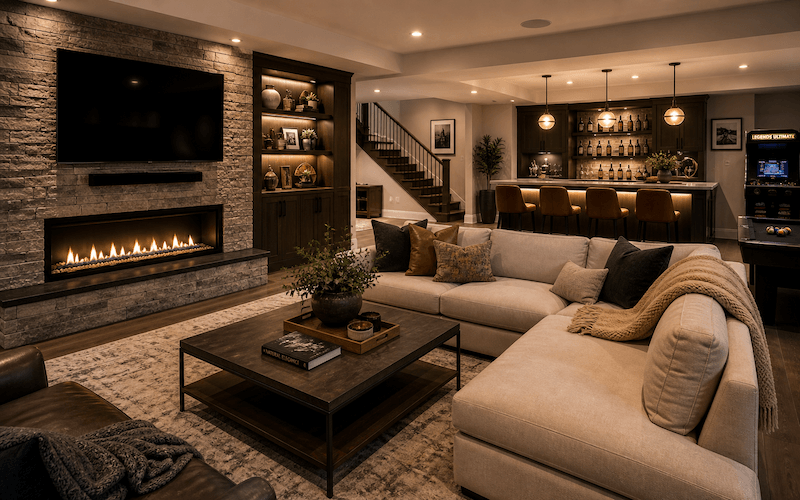
Before-and-after photos are powerful, but they only show part of the story.
A finished kitchen, bathroom, basement, or addition may look beautiful online, but homeowners should also care about how the project was planned, communicated, protected, managed, and completed.
The real question is not only:
“Does the finished project look good?”
The better question is:
“What process created that result?”
A strong remodeling process helps protect the homeowner from confusion, unnecessary delays, poor communication, unclear decisions, and frustrating surprises.
Understand the Timeline Before You Start
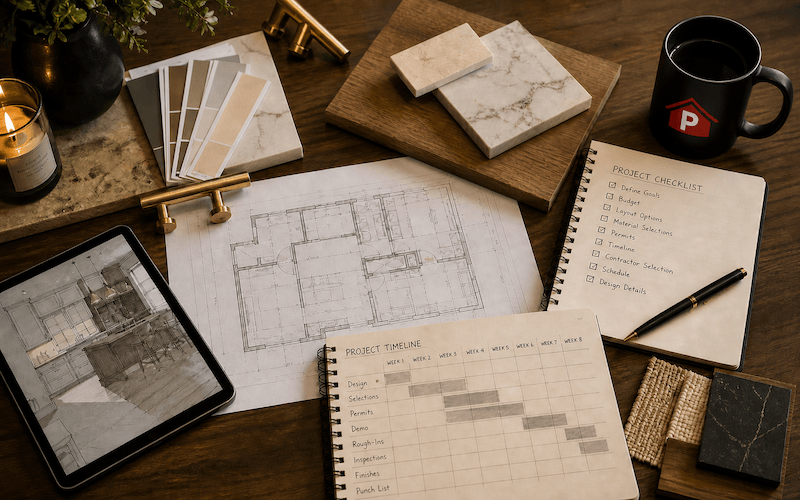
A remodel timeline is not just the number of days someone is physically working in your house.
A real remodeling timeline includes:
- Initial consultation
- Design development
- Estimate review
- Material selections
- Permitting
- Ordering materials
- Scheduling
- Pre-construction meeting
- Demo
- Rough work
- Inspections
- Finishes
- Punch list
- Final walkthrough
- Warranty handoff
Homeowners often underestimate how much happens before construction starts.
That pre-construction phase matters because it helps reduce confusion, delays, change orders, and last-minute decisions.
The more organized the process is before construction, the smoother the experience usually feels during construction.
Ask About the Process, Not Just the Portfolio
Every contractor will show you finished photos.
Pretty photos show the result.
Process shows how you get there.
Before hiring a remodeling contractor, ask:
- How do you communicate?
- How often will I receive updates?
- How do you document changes?
- How do you protect the home?
- How do you manage subcontractors?
- How do you handle delays?
- How do you inspect quality?
- How do you close out the project?
- How do you support the homeowner after completion?
- What workmanship warranty do you provide?
A strong remodeling process should give homeowners clarity before, during, and after the project.
At Prosper Construction, this is central to the way we think about remodeling.
Your home deserves more than a contractor who simply shows up and starts building. It deserves a clear process, communication, craftsmanship, accountability, and long-term protection.
Choose Materials That Age Well
Trendy materials can look dated fast.
Cheap materials can wear out quickly.
A smart remodel balances beauty, durability, maintenance, and timeless appeal.
Before choosing a material, ask:
- Will I still like this in five years?
- Is it easy to clean?
- Can it handle daily use?
- Does it match the rest of the home?
- Is it worth the upgrade?
- What happens if it fails?
The best materials should feel personal, functional, and durable enough to support the way your home is actually used.
Use a Remodel Planning Checklist Before You Hire Anyone
Before starting your remodel, make sure these are clear:
- Project goal is defined
- Budget range is realistic
- Must-haves are separated from nice-to-haves
- Scope is written
- Selections are documented
- Timeline is explained
- Communication process is clear
- Site protection plan is reviewed
- Change-order process is understood
- Warranty is written
- Final walkthrough is planned
- Post-project support is explained
If too many of these are unclear, it may be too early to start construction.
That does not mean you are not ready to remodel.
It means you need a better planning process before moving forward.
Why Prosper Construction Created This Free Guide
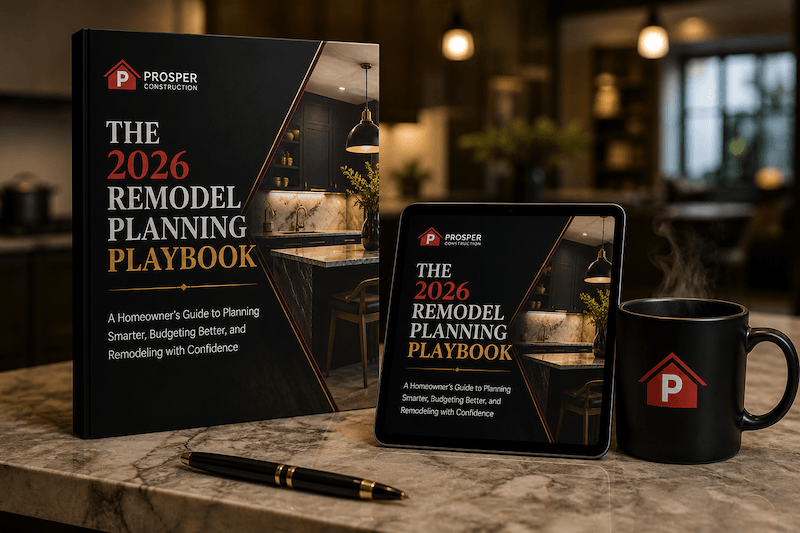
Prosper Construction created The 2026 Remodel Planning Playbook to help homeowners make better decisions before hiring a contractor.
This free guide walks through the most important planning steps, including budgeting, timeline expectations, material selection, contractor questions, lifestyle planning, and long-term protection.
Whether you are planning a kitchen remodel, bathroom renovation, basement transformation, home addition, or larger home improvement project, the guide is designed to help you move forward with more clarity and confidence.
At Prosper Construction, we believe remodeling should feel organized, protected, and built to last.
Your home deserves:
- A clear process
- Communication
- Craftsmanship
- Accountability
- Long-term protection
- A company that stands behind the work
That is why Prosper is known as The Transferable Lifetime Workmanship Warranty Company.
Download the Free 2026 Remodel Planning Playbook
Before you compare estimates, choose materials, or hire a contractor, download the free guide.
Inside, you will learn how to plan smarter, budget better, avoid costly surprises, understand your remodel timeline, choose materials that age well, ask better contractor questions, protect your investment, and remodel with more confidence.
Download Your Free GuideRemodeling Services in Massachusetts, Worcester County, Central MA, and MetroWest
Prosper Construction helps homeowners plan and complete remodeling projects throughout Massachusetts, including Worcester County, Central Massachusetts, and MetroWest communities.
Our remodeling services include:
- Kitchen remodeling
- Bathroom remodeling
- Basement remodeling
- Home additions
- Whole-home renovations
- Interior remodeling
- Design-build remodeling
- Custom storage and built-ins
- Luxury remodeling projects
- Long-term home improvement planning
If you are searching for a remodeling contractor in Massachusetts, a kitchen remodeler in Worcester County, a bathroom remodeling company in Central MA, or a basement finishing contractor near MetroWest, Prosper Construction can help you plan your next project with confidence.
Frequently Asked Questions About Remodel Planning
What should I plan before starting a remodel?
Before starting a remodel, define your project goal, budget range, must-have features, nice-to-have features, timeline expectations, material selections, communication preferences, and contractor questions. A clear plan helps reduce surprises once construction begins.
How do I budget for a kitchen, bathroom, or basement remodel?
A remodel budget should include labor, materials, design selections, permits, site protection, hidden-condition planning, contingency, and warranty value. Homeowners should also understand what is included and excluded before comparing contractor estimates.
What questions should I ask before hiring a remodeling contractor?
Ask how the contractor communicates, documents changes, handles delays, protects your home, manages subcontractors, inspects quality, closes out the project, and supports the homeowner after completion.
How long does a home remodel usually take?
A remodel timeline depends on the project size, scope, selections, permits, material availability, and inspections. A real timeline includes more than construction days. It also includes planning, estimating, selections, permitting, scheduling, pre-construction preparation, final walkthrough, and warranty handoff.
Why does a workmanship warranty matter?
A workmanship warranty matters because it shows whether a contractor is willing to stand behind the quality of the work after the project is complete. For homeowners, warranty coverage can provide added confidence and long-term protection.
Does Prosper Construction offer free remodeling consultations?
Yes. Homeowners can schedule a free design consultation with Prosper Construction to discuss kitchen remodeling, bathroom remodeling, basement remodeling, home additions, and larger home improvement projects.